

I-75 Cap Feasibility Study Concludes, Advancing Plan to Reconnect Detroit Neighborhoods
Updated concepts shaped by nearly a year of community engagement move project toward funding
DETROIT – After nearly a year of community engagement, the I-75 Cap Feasibility Study has reached a major milestone, delivering a community-informed vision for three public spaces that would reconnect neighborhoods divided by Interstate 75. The project now advances into funding strategy and implementation planning.
Supported by a $2 million U.S. Department of Transportation Neighborhood Access & Equity Planning grant, the effort represents one of a growing number of projects nationwide to improve walkability, mitigate negative environmental impacts from surface transportation, advance transportation equity and heal neighborhoods divided by mid-century freeway construction. Led by the Downtown Detroit Partnership in partnership with the Michigan Department of Transportation (MDOT), the City of Detroit and supported by The Kresge Foundation, the feasibility study concludes with updated renderings, programming recommendations and technical findings that will guide the project’s next phase.
Over the past year, residents, business owners, community organizations and other stakeholders helped shape a vision for three distinct cap spaces. To date, the project has received more than 2,000 responses through in-person engagement and online surveys, while collecting oral histories from residents, along with photographs and personal stories documenting neighborhoods impacted by the original construction of I-75. These community contributions helped shape the vision for the three proposed cap spaces and ensure the project reflects the history, experiences and priorities of surrounding neighborhoods.
“The I-75 Cap project represents an opportunity to reconnect neighborhoods, restore connections and create new public spaces shaped by the people who call this area home,” said Eric B. Larson, CEO, Downtown Detroit Partnership. “Through nearly a year of community engagement, past and present residents and businesses have helped inform a vision that honors Detroit’s history while creating new opportunities for recreation, culture, economic growth and community connection.”
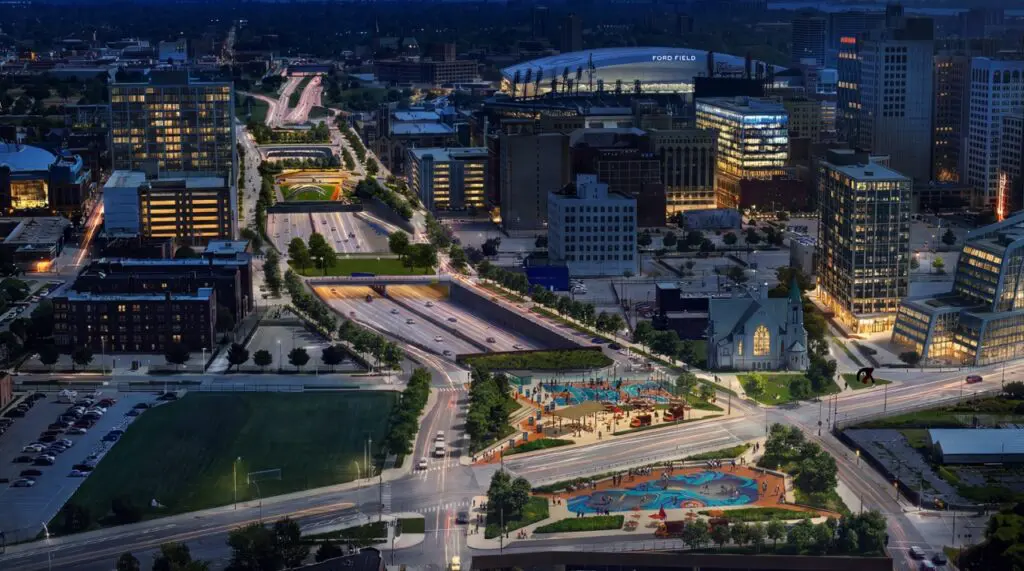
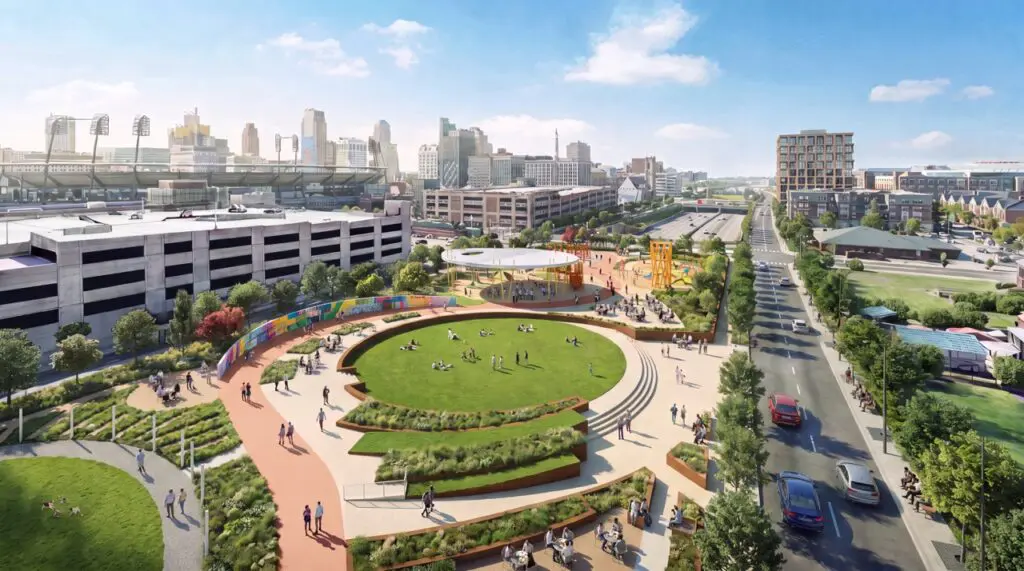
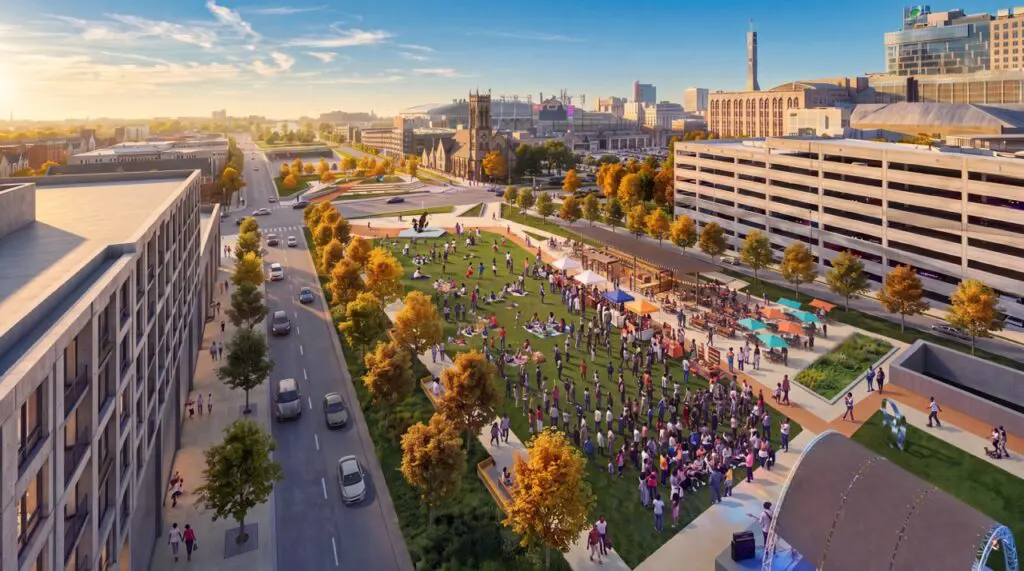
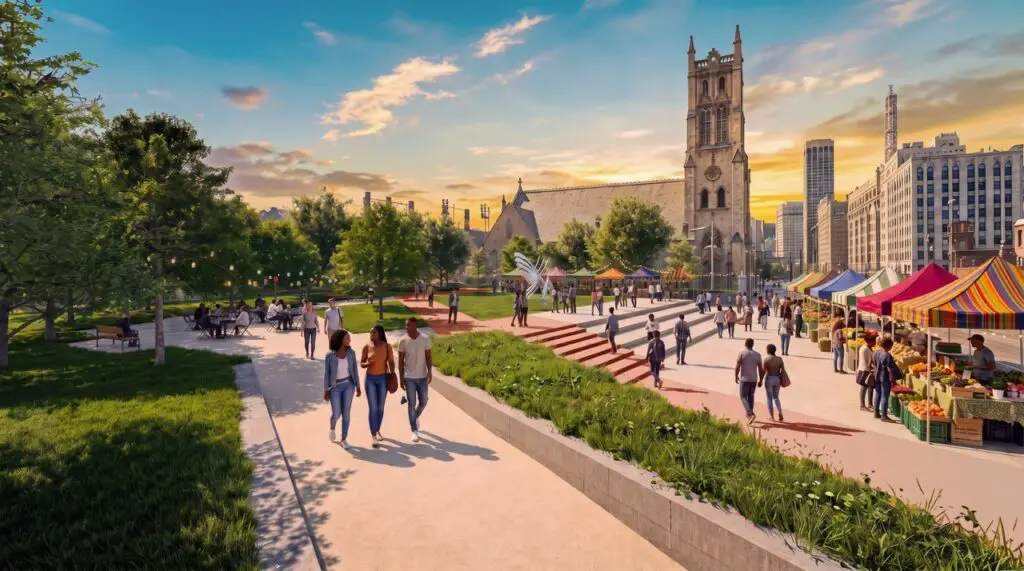
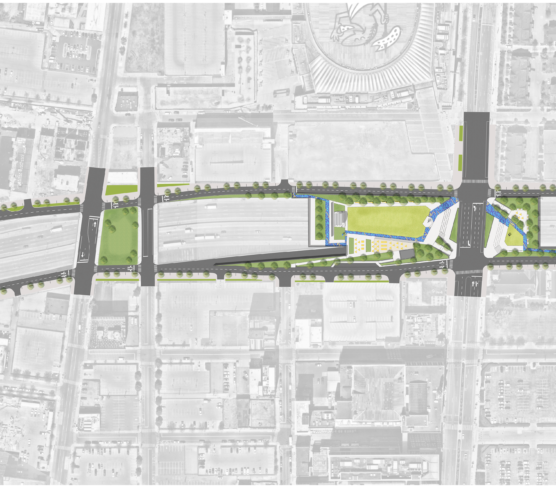
The feasibility study results identified three destination spaces for each potential cap, each with its own character and purpose:
- West Cap: Playful, Dynamic, Urban (near Cass Tech/UMCI/Wayne State University) – A youth-oriented gathering space focused on recreation, education and community events featuring sports courts, shaded gathering areas, food trucks and flexible programming.
- Central Cap: Vibrant City Hub (near Little Caesars Arena) – A vibrant setting for citywide celebrations and everyday experiences through a performance pavilion, event lawn, outdoor café and neighborhood amenities.
- East Cap: Reflection, Memory and Return (Near Brush Park/Paradise Valley) – A restorative landscape honoring Detroit’s Black cultural legacy gardens, walking paths, storytelling spaces, playscapes and public art installations.
In connection with developing the public space vision, the feasibility study evaluated structural engineering, fire and life safety requirements, access and mobility, stormwater management, environmental considerations and preliminary construction costs. AECOM, the project’s engineering consultant, led the technical analysis, confirming the proposed highway caps are technically feasible while identifying key engineering considerations.
With the feasibility study complete, the project will move into the National Environmental Policy Act (NEPA) process. During this phase, additional technical analysis will further evaluate cultural resources, noise, air quality, mobility and other environmental considerations while supporting coordination with state and federal resource agencies.
Preliminary cost estimates indicate that the total project costs are approximately $300 million, or approximately $100 million per cap. The next phase will also identify potential public and private funding sources, determine long-term operations and maintenance responsibilities, and evaluate phasing strategies to support future implementation.
“The completion of the feasibility study represents an important milestone, but it is just the beginning of the next chapter for the I-75 Cap project,” said James Fidler, urban innovation strategist, Downtown Detroit Partnership. “This community-informed vision provides a strong foundation as we move into environmental review, funding discussions and future implementation. We remain committed to keeping residents and businesses engaged and ensuring the spaces created reflect the history, needs and aspirations of the surrounding neighborhoods.”
Additional information and updated renderings are available at downtowndetroit.org/I-75.
###
About the Downtown Detroit Partnership
Since 1922, the Downtown Detroit Partnership (DDP) has worked to cultivate social and economic impact in Downtown Detroit. As a member-based nonprofit, the DDP convenes civic, corporate, community, and philanthropic partners to create a vibrant and world-class urban core. As a leader in Downtown urban innovation, the organization also provides small business support and manages, programs, and stewards 18 parks and public spaces throughout Downtown Detroit. Learn more at DowntownDetroit.org and engage on social media @DowntownDet.
About the I-75 Cap Project
The I-75 Cap is a locally led, and U.S. Department of Transportation supported, initiative to reconnect communities cut off from economic and social opportunities by prior transportation infrastructure decisions. The Downtown Detroit Partnership is co-leading this planning initiative with the City of Detroit and the Michigan Department of Transportation.